
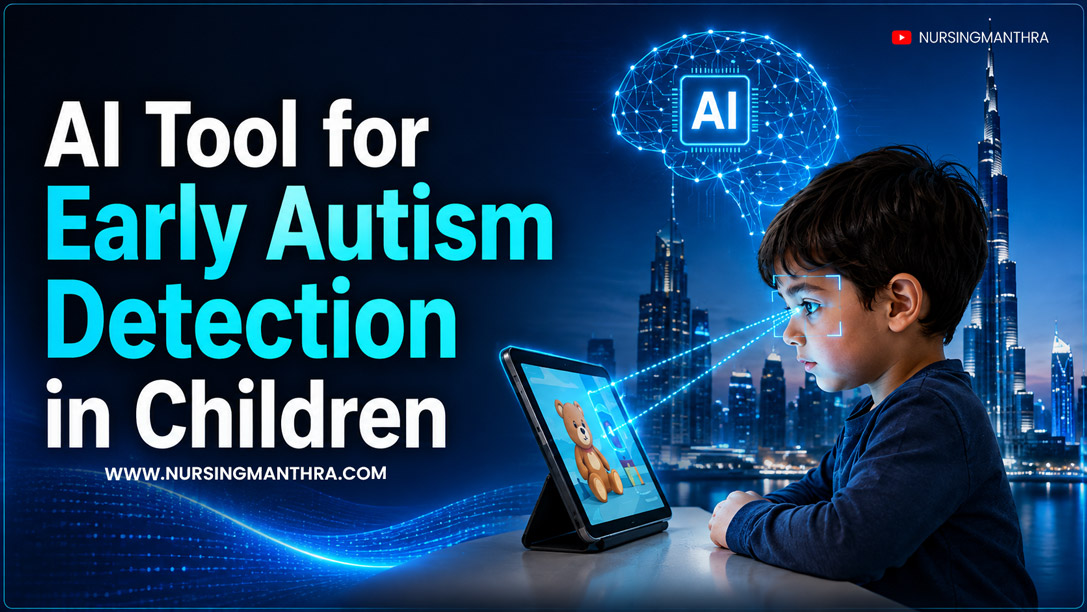
Dubai: Researchers in Dubai have developed a new artificial intelligence (AI)-based screening tool aimed at identifying Autism Spectrum Disorder (ASD) in children at an early stage. The technology, developed by a research team led by the University of Dubai, is designed to support faster screening, diagnosis, and early intervention.
The system combines eye-tracking analysis with behavioural data to identify children who may be at risk of autism. Researchers say the tool could help reduce waiting times for specialist assessments by identifying potential signs of autism at an earlier stage.
During the screening process, children watch short videos containing social and geometric visual scenes. The system tracks their eye movements and gaze patterns and analyses how they respond to the visual content.
The eye-tracking information is then combined with data collected through a questionnaire completed by the child’s parents. An AI model analyses both sets of information to identify possible early indicators of Autism Spectrum Disorder.
One of the major advantages of the system is its speed. The entire screening process takes only around two to three minutes. The software can also operate on tablets and smartphones, making it potentially accessible beyond specialised clinical settings.
According to researchers, the AI tool has achieved an accuracy rate of approximately 96% in preliminary trials. In the future, the technology could potentially allow autism screening to be carried out not only in clinics and healthcare facilities but also from home.
The project has received funding through the Dubai Research, Development and Innovation Grant Initiative, which operates under the Dubai Future Foundation.
The research is being conducted in collaboration with several leading institutions, including the University of Dubai College of Engineering and Information Technology, Emirates Health Services, and Al Amal Psychiatric Hospital.
Researchers emphasise that the AI-powered system is not intended to replace an official clinical diagnosis of autism. Instead, it is designed as an early screening tool that can help identify children who may require further assessment and ensure they are referred to specialists at the appropriate time.
Clinical validation studies are currently continuing across different healthcare centres to further evaluate the effectiveness and reliability of the technology.
If successfully validated and implemented on a wider scale, the AI-based screening system could help improve early autism detection, reduce delays in specialist assessment, and enable children and their families to access appropriate support and intervention sooner.