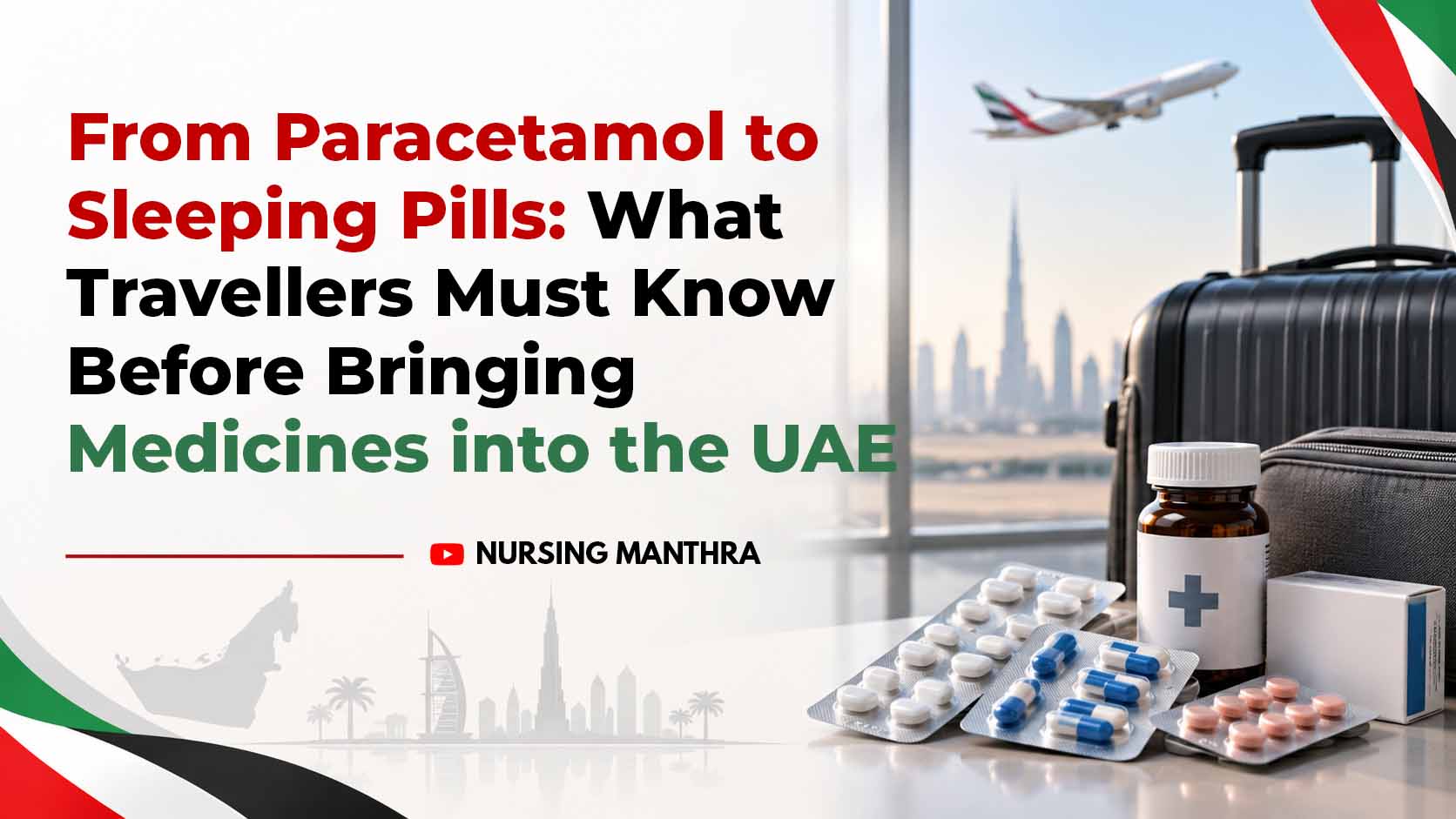
Dubai, UAE – Travellers planning to enter the United Arab Emirates are being advised to check the country’s strict regulations on carrying medicines in personal luggage. From common painkillers such as paracetamol to prescription sleeping pills and controlled medications, understanding what is permitted, restricted or prohibited is essential to avoid complications at airports.
The UAE maintains strict controls on narcotic substances, psychotropic medications and certain prescription drugs. Travellers must ensure that medicines brought into the country comply with local regulations, even if those medicines are legally prescribed or widely available in their home countries.
UAE Announces Ciprofloxacin Ban in Veterinary Sector from November 1
The Emirates Drug Establishment (EDE) has announced a ban on veterinary medicines and raw materials containing ciprofloxacin, effective November 1, 2026.
The decision is part of the UAE’s efforts to combat antimicrobial resistance and preserve the effectiveness of antibiotics used in human medicine.
The restriction covers nine veterinary pharmaceutical products, including eight imported products and one locally registered product.
However, the new regulation specifically targets the veterinary sector and does not constitute a general ban on ciprofloxacin prescribed for human medical treatment. Travellers carrying medicines for personal use should continue to follow the UAE’s applicable medication regulations.
Three Categories of Medicines Travellers Should Know
1. Prohibited Drugs and Substances
The UAE strictly prohibits the unauthorised possession and importation of illegal narcotics and psychotropic substances.
These include heroin, cocaine, cannabis, LSD, synthetic cannabinoids and other substances classified as prohibited under UAE law.
Travellers should be aware that certain substances considered legal elsewhere may be prohibited in the UAE. Violations can result in serious legal consequences, including confiscation, prosecution and possible deportation.
2. Controlled Medicines Requiring Medical Documentation
Several prescription medicines are classified as controlled substances in the UAE and are subject to additional requirements.
These may include:
- Opioid painkillers: Codeine, morphine and certain other opioid medications.
- Anti-anxiety medicines: Diazepam, alprazolam and similar medications.
- Sleeping pills: Certain sedatives and prescription sleep medications.
- Epilepsy medications: Specific medicines that fall under the UAE’s controlled-drug classifications.
Travellers carrying controlled medicines must have appropriate medical documentation, including a valid prescription and relevant medical report.
Under the Emirates Drug Establishment’s published guidance, eligible travellers may carry controlled medicines for the duration of their stay, up to a maximum of three months’ treatment, subject to the applicable restrictions.
Advance electronic approval is available through the EDE’s personal medicine import permit service. The EDE currently describes this service as optional for travellers entering the country, although controlled medicines must still satisfy documentation and customs requirements.
Travellers are encouraged to obtain approval in advance whenever possible to minimise uncertainty during airport inspections.
3. Common Medicines That Generally Do Not Require Prior Approval
Many commonly used medicines may be carried into the UAE for personal use without obtaining advance permission, provided they are not classified as controlled or prohibited substances.
Examples include:
- Paracetamol and ibuprofen
- Common antihistamines
- Insulin and other routine diabetes medicines
- Blood pressure medications
- Common non-controlled antibiotics
Travellers are advised to keep medicines in their original packaging and carry valid prescriptions for prescription-only treatments.
The permitted status of a medicine depends on its active ingredients and UAE classification, rather than whether it is available over the counter in another country.
Important Precautions Before Travelling to the UAE
Travellers should follow these essential precautions when carrying medicines:
- Check the generic name: Verify the active ingredient of each medicine rather than relying only on the brand name printed on the packaging.
- Keep original packaging: Carry medicines in their original, clearly labelled containers.
- Carry supporting documents: Keep a doctor’s prescription and medical report, particularly for controlled or long-term medications.
- Check quantity limits: Ensure that the amount carried is appropriate for personal treatment and complies with UAE requirements.
- Verify controlled-drug status: Consult the Emirates Drug Establishment’s official controlled and semi-controlled medicines list before travelling.
- Contact the relevant authorities: If uncertain, seek clarification from the EDE or the nearest UAE embassy or consulate. Airlines can also advise on cabin and checked-baggage restrictions.
Where Can Travellers Check Medicine Regulations?
Travellers can access the official medicine import permit service and regulatory information through the Emirates Drug Establishment (EDE) website at https://www.ede.gov.ae.
The online service allows eligible travellers to submit medical documentation and request advance approval for controlled medicines. The permit service is currently free of charge.
Passengers should check the latest rules before departure, particularly if they are carrying sleeping pills, strong painkillers, psychiatric medications or other medicines containing controlled ingredients.
Final Advisory
The UAE’s medicine regulations are designed to protect public health and prevent the misuse of controlled substances. Travellers are encouraged to review their medications carefully before departure rather than assuming that a medicine permitted in their home country will automatically be allowed in the UAE.
Checking the medicine’s generic name, carrying proper medical documentation and confirming its legal status in advance can help ensure a smoother journey through UAE airports.