Kannur: Shigellosis, a serious intestinal infection caused by Shigella bacteria, is not a new disease. However, recent reports from Kerala have again brought public attention to this highly contagious infection, especially because children and people with weak immunity are more vulnerable to severe illness.
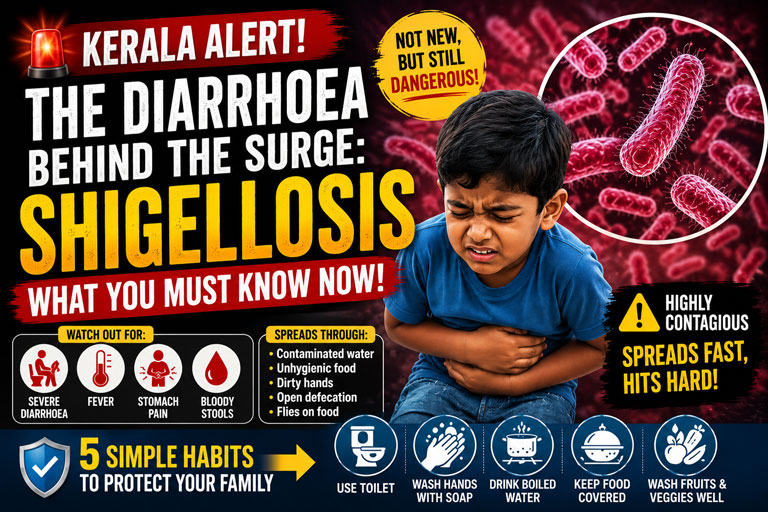
Shigellosis mainly affects the intestine and commonly causes severe diarrhoea, fever, abdominal pain and stomach cramps. In some cases, the stool may be watery, while in more serious cases, blood or mucus may be seen in the stool. The symptoms usually begin one to two days after the bacteria enter the body and may last for about five to seven days.
Health experts say the disease spreads through the faecal-oral route. This means the bacteria from the stool of an infected person can reach another person through contaminated hands, food, water, surfaces or objects. The infection can spread quickly because even a very small number of Shigella bacteria can make a person sick.
Children below five years of age are at higher risk because they may not always follow proper hand hygiene and their immune system is still developing. Elderly people, malnourished individuals and people with low immunity are also more likely to develop complications. In rare cases, young children may develop seizures during the illness, usually associated with high fever, dehydration or electrolyte imbalance.
Doctors usually confirm shigellosis through stool testing or stool culture. In most mild cases, patients recover with rest, oral rehydration solution and adequate fluid intake. The main aim is to prevent dehydration. Antibiotics may be required in moderate to severe cases, but they should be taken only under medical advice because antibiotic resistance in Shigella is becoming a growing concern worldwide.
Public health officials stress that people should seek medical care immediately if diarrhoea is severe, if blood is present in the stool, if fever continues, or if a child shows signs of dehydration such as reduced urination, dry mouth, sunken eyes, excessive sleepiness or inability to drink fluids.
The disease commonly spreads when sanitation is poor. Open defecation, leaking toilet tanks, contaminated wells, unsafe drinking water and improper waste disposal can all increase the risk. If a person with diarrhoea prepares food without washing hands properly after using the toilet, the bacteria can easily spread to others. Food items exposed to flies can also become contaminated.
Recent reports from Kerala have linked the rise in cases to the monsoon season, when water contamination and diarrhoeal diseases usually increase. State health authorities have also been focusing on disinfecting drinking water sources, checking water quality, promoting handwashing and ensuring the availability of ORS and zinc in health centres and anganwadis.
There are four major types of Shigella: Shigella sonnei, Shigella flexneri, Shigella boydii and Shigella dysenteriae. Among these, Shigella sonnei is commonly associated with many outbreaks and has been reported more frequently in the current situation.
Prevention remains the most effective protection. People should use toilets for defecation and avoid open defecation. Hands must be washed thoroughly with soap and water after using the toilet, before eating, before preparing food and before feeding children. Drinking water should be boiled properly and cooled before use. Boiled water should not be mixed with unboiled water.
Cooked food should be covered properly to prevent flies from sitting on it. Fruits and vegetables used in salads must be washed well with safe water. People with diarrhoea should avoid preparing food for others until they recover. Schools, hostels, anganwadis and public kitchens should give special attention to clean toilets, safe water storage and regular handwashing facilities.
Shigellosis can be controlled if symptoms are identified early and hygiene practices are followed strictly. The message from health experts is clear: there is no need to panic, but families, schools and communities must act responsibly to prevent the spread.