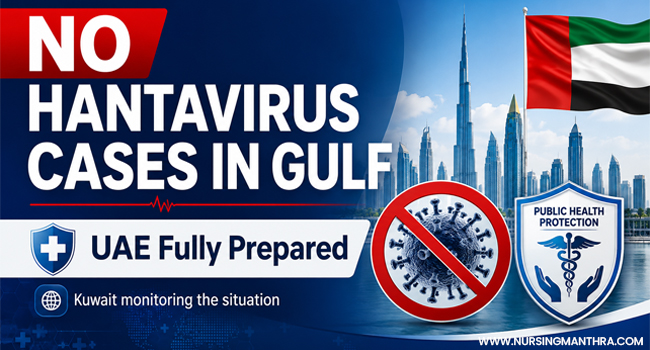
Abu Dhabi: Following reports of hantavirus cases in Europe, the UAE Ministry of Health and the National Emergency Crisis and Disaster Management Authority have stated that the country is fully prepared to handle any situation.
Authorities said they are closely monitoring global developments related to the virus. So far, no hantavirus cases have been reported anywhere in the Gulf region.
Minister of Health and Prevention Ahmed Ali Al Sayegh said the UAE is ready to respond effectively if any case is detected. He also confirmed that a meeting was held with senior officials to review the latest updates, national health surveillance systems, preventive measures, and coordination with various health institutions.
The UAE has strengthened strict precautionary measures and monitoring systems to protect public health, officials said.
Authorities also stated that there is no need for public panic, as the World Health Organization has clarified that hantavirus is unlikely to become a global pandemic like COVID-19. The public has been urged not to spread false information and to rely only on official announcements from health authorities.
Kuwait Monitoring the Situation
Kuwait City: Kuwait’s Ministry of Health is also closely monitoring the global situation related to hantavirus. Ministry spokesperson Dr. Abdullah Al Sanad said the risk of disease spread inside Kuwait is currently very low.
According to a recent assessment by the Kuwait Center for Disease Prevention and Control, there are no signs of widespread infection in the country.
The ministry said hantavirus mainly spreads through direct or indirect contact with infected rodents or their urine, droppings, or saliva.
Kuwait has strengthened preventive measures, including laboratory testing facilities, preparedness of health teams, disease surveillance, and information exchange with international health agencies.
What is Hantavirus?
Hantavirus is a rare virus that can spread from rodents to humans. According to health authorities, it does not spread rapidly through the air like COVID-19.
The virus mainly spreads through contact with infected rodents or their urine, droppings, and saliva. It can affect the lungs and kidneys.
Common symptoms may include fever, headache, muscle pain, tiredness, vomiting, and weakness. In severe cases, it may cause breathing difficulty, low oxygen levels, and kidney-related complications.
Health authorities have advised the public to maintain proper hygiene, avoid contact with rodents, and follow official health guidance.