
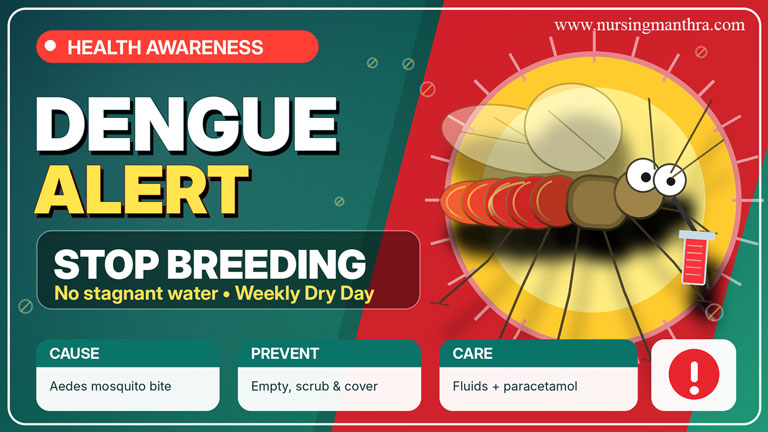
With intermittent rain and humid weather creating ideal conditions for mosquito breeding, health officials and community volunteers are urging the public to take dengue prevention seriously. Dengue is not just a seasonal fever; it is a mosquito-borne viral disease that can spread quickly when stagnant water is allowed to collect around homes, schools, offices, shops and public spaces.
Dengue is caused by the dengue virus and is mainly spread through the bite of infected Aedes mosquitoes, especially Aedes aegypti. These mosquitoes commonly live close to people and lay eggs in containers that hold water, including buckets, bowls, flowerpots, vases, discarded tyres and other household items. They can bite during the day as well as at night, making round-the-clock prevention important.
How Dengue Spreads
The disease does not begin from dirty surroundings alone; it begins when mosquitoes get a place to breed. Even a small amount of clean stagnant water can become a breeding site. Water collected in coconut shells, plastic cups, broken bottles, unused buckets, plant trays, roof gutters, coolers, open tanks, drums and discarded tyres can produce mosquitoes within days.
When a mosquito bites a person already infected with dengue, the mosquito can become infected. It can then spread the virus to other people through later bites. This is why preventing mosquito bites is important not only for healthy people but also for those already suffering from fever. A dengue patient should avoid mosquito bites during illness so that mosquitoes do not carry the virus to others.
Symptoms People Should Not Ignore
Doctors say dengue may first look like an ordinary viral fever, but it needs careful attention. Common symptoms include sudden high fever, severe headache, pain behind the eyes, muscle and joint pain, nausea, vomiting, swollen glands and skin rash. According to the World Health Organization, dengue symptoms usually begin 4 to 10 days after infection and often last 2 to 7 days.
The danger period can begin when the fever starts coming down. Warning signs of severe dengue include severe stomach pain, repeated vomiting, bleeding from the nose or gums, vomiting blood, blood in stool, unusual tiredness, restlessness, cold or pale skin and breathing difficulty. Anyone with these symptoms should be taken to a hospital immediately. Severe dengue is a medical emergency.
Weekly Dry Day: The Strongest Community Remedy
The most effective dengue prevention method is source reduction, which means destroying mosquito-breeding places before adult mosquitoes develop. Every household should set aside one fixed day each week as a “dry day.” On that day, all water-holding containers should be emptied, scrubbed, covered or dried.
Families should check flowerpots, fridge trays, terrace corners, unused vessels, pet bowls, water tanks, tyres, buckets, coconut shells, plastic waste and open drains. Schools and offices should inspect toilets, rooftops, construction areas, gardens, water coolers and storage spaces. Hospitals and public institutions also need regular mosquito-breeding checks because Aedes mosquitoes can breed in small, unnoticed water collections. India’s vector-borne disease control guidance describes source reduction as an environment-friendly method aimed at preventing mosquito larvae from developing.
Personal Protection Matters Too
Cleaning alone is not enough. People must also protect themselves from mosquito bites. Health agencies recommend using mosquito repellent, wearing loose long-sleeved clothes and long pants, keeping windows and doors screened, using mosquito nets when needed and staying in well-protected rooms. The CDC says the best way to prevent dengue is to prevent mosquito bites and control mosquitoes in and around the home.
Children, elderly people, pregnant women and those with long-term illnesses should be given extra attention because complications can become serious if care is delayed. During outbreaks, people with fever should avoid self-medication and seek medical advice early.
Safe Treatment and Home Care
There is no specific antiviral medicine that cures dengue. Treatment mainly focuses on careful monitoring, rest, hydration and fever control. For mild illness, patients should drink plenty of fluids such as water, oral rehydration solution and electrolyte drinks to prevent dehydration. They should rest as much as possible and follow medical advice.
For fever and body pain, paracetamol, also known as acetaminophen, is generally recommended. Medicines such as aspirin, ibuprofen and other NSAIDs should be avoided because they may increase the risk of bleeding. The CDC advises dengue patients to use acetaminophen for fever and pain, avoid aspirin and ibuprofen, drink fluids and watch carefully for warning signs.
Home remedies such as papaya leaf juice or herbal drinks should not replace medical treatment. Some people may use traditional drinks for comfort, but dengue patients need proper diagnosis, hydration, platelet monitoring when advised and urgent hospital care if warning signs appear. Delaying treatment while depending only on home remedies can be dangerous.
What Local Bodies and Communities Should Do
Dengue control cannot be achieved by one family alone. A single neglected plot, uncovered tank or pile of waste can become a mosquito source for an entire neighbourhood. Local bodies, residents’ associations, school authorities, shop owners and construction site managers should work together to remove waste, clean drains, cover water storage containers and conduct regular inspections.
Public awareness messages should be simple: remove stagnant water, prevent mosquito bites, treat fever safely and seek medical care early. Community volunteers can visit homes, identify breeding spots, guide families and report high-risk areas to health workers. Public health guidance also stresses the importance of encouraging residents to discard containers that collect water and reduce places where Aedes mosquitoes lay eggs.
The Message Is Clear
Dengue prevention begins before the mosquito bites. Every bucket emptied, every tyre removed, every tank covered and every dry day observed can reduce the risk of infection. Clean surroundings, early diagnosis, safe fever treatment and quick hospital care during warning signs are the strongest weapons against dengue.
Health officials warn that waiting until cases rise is too late. The fight must begin now, at every home, school, office and street corner.