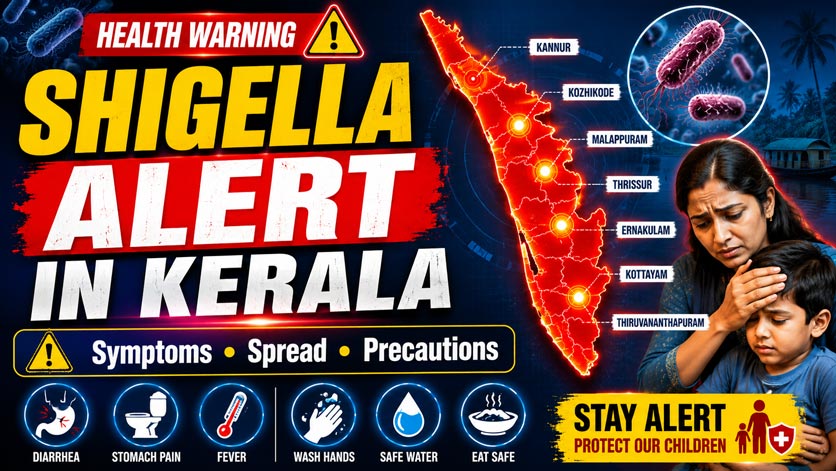
Concern is rising in Kerala after Shigella infections were confirmed in more districts, prompting health authorities to urge the public to remain vigilant and follow strict hygiene practices.
The latest cases have been reported from Thiruvananthapuram, where three children tested positive for Shigella. Two children have also been confirmed infected in Kollam, while nine students were earlier reported to have contracted the disease in Wayanad. The alert comes after the Health Department confirmed that the death of a young child in Kozhikode’s Kuttikkattoor was linked to Shigella infection.
With cases being reported from multiple districts, health officials have stressed the need for immediate preventive action, especially in schools, households with young children, and areas where safe drinking water and sanitation may be a concern.
What is Shigella?
Shigella is a group of bacteria that causes an intestinal infection known as shigellosis. The illness mainly affects the digestive system and is most commonly associated with diarrhoea. However, unlike ordinary diarrhoeal illness, Shigella can be more severe and may spread quickly if hygiene precautions are not followed.
The infection spreads through the faecal-oral route. This means even a small amount of contaminated stool from an infected person can transmit the bacteria if it reaches food, water, hands, surfaces, or utensils. Contaminated drinking water, improperly handled food, unwashed fruits and vegetables, and close contact with an infected person are common routes of transmission.
Food prepared by a person who has symptoms, especially if proper handwashing is not followed, can also become a source of infection.
Why the infection spreads fast
Shigella is considered highly contagious. It can spread from one person to another in homes, schools, childcare centres, hostels and other crowded settings. Children are particularly vulnerable because they may not always follow hand hygiene practices and are more likely to come into close contact with one another.
The risk is higher when toilets are not properly cleaned, diapers are not disposed of safely, drinking water sources are contaminated, or cooked food is left uncovered and exposed to flies.
Public-health experts warn that children below five years of age, elderly people, and those with weakened immunity face a greater risk of complications if the infection becomes severe.
Symptoms to watch for
The most common symptoms of Shigella infection include diarrhoea, fever, stomach pain, vomiting, tiredness and weakness. In some cases, the stool may contain blood or mucus, which is an important warning sign.
Since Shigella primarily affects the intestine, infected persons may experience frequent bowel movements, abdominal cramps and an urgent need to pass stool. Symptoms may appear within a few days of exposure and often last several days. In some people, symptoms may be mild, while others may develop severe illness requiring medical attention.
Health officials advise parents and caregivers to be especially alert if children develop diarrhoea along with fever, blood in stool, repeated vomiting, signs of dehydration, or unusual tiredness.
When to seek medical help
Medical care should be sought immediately if a person has bloody diarrhoea, persistent fever, severe abdominal pain, dehydration, reduced urination, dry mouth, dizziness, extreme weakness, or if the patient is a young child.
People with symptoms should avoid self-medication. Oral rehydration solution, salted rice water, tender coconut water and other safe fluids can help prevent dehydration, but medical advice is important if symptoms are severe or persistent.
Doctors may recommend laboratory testing to confirm the infection. Antibiotics may be prescribed in certain cases, especially for severe illness or vulnerable patients, but they should be taken only under medical supervision.
Precautions to prevent Shigella
Health authorities have advised the public to drink only boiled and cooled water. Drinking water sources should be chlorinated where necessary, especially in areas where contamination is suspected.
Hands must be washed thoroughly with soap and water before eating, before preparing food, after using the toilet, after cleaning a child, and after handling diapers or soiled clothes. Children should also be taught proper handwashing habits.
Fruits and vegetables must be washed well before use. Food should be cooked properly, kept covered and consumed fresh. Eating stale food should be avoided. Reheating cooked food repeatedly is not advisable.
People with diarrhoea or other symptoms should not prepare or serve food for others. They should also avoid close contact with children, elderly persons and immunocompromised individuals until they recover.
Open defecation must be avoided. Toilets and bathrooms used by infected persons should be cleaned and disinfected regularly. Diapers and stool from young children must be disposed of safely.
Fly control is also important, especially in kitchens and food preparation areas. Waste should be properly managed and food items should not be left exposed.
Children with diarrhoea should not be sent to school, daycare or tuition centres until they are medically fit to return. This is important to prevent outbreaks in classrooms and childcare settings.
Public vigilance needed
The confirmation of Shigella cases in several districts has made it clear that prevention cannot be limited to hospitals alone. Safe drinking water, clean toilets, proper food handling and hand hygiene are the most effective ways to stop transmission.
Health officials have urged the public not to panic, but to remain alert. Early detection, timely treatment and strict hygiene practices can prevent the disease from spreading further and protect vulnerable groups, especially young children.