
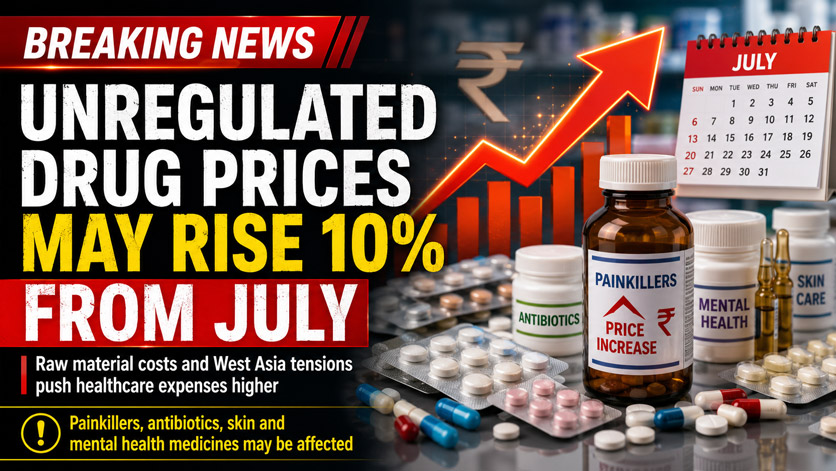
There is growing concern that the conflict in West Asia may increase healthcare expenses. The shortage of petroleum products has affected the availability of raw materials used in pharmaceutical manufacturing.
The shortage of key raw materials used in the medical equipment manufacturing sector is also becoming a major setback. If the authorities accept the demand of pharmaceutical manufacturers to compensate for their heavy losses, the prices of unregulated medicines may increase by up to 10% from July.
The cost of active pharmaceutical ingredients is rising sharply. According to pharmaceutical companies, the prices of these ingredients have increased by 30% to 50% since February. Reports also suggest that the prices of some unregulated medicines were already increased during April and May.
Manufacturers are legally allowed to increase the prices of medicines that are not included in the regulated list by up to 10% in a year. The drug price control committee has only a limited role in fixing the prices of these medicines.
Medicines such as painkillers, antibiotics, dermatology medicines, and psychiatric medicines may be affected by the price hike.
Dr. Viranchi Shah, national spokesperson of the Indian Drug Manufacturers’ Association, had told the media that discussions are ongoing with the Central Drugs Department to balance the concerns of the pharmaceutical industry and the needs of patients.
Industry associations have also requested the government to allow a price increase. There are also indications that steps are being considered to ensure that when raw material prices come down, the benefit is passed on to patients.