

Description
Book Description
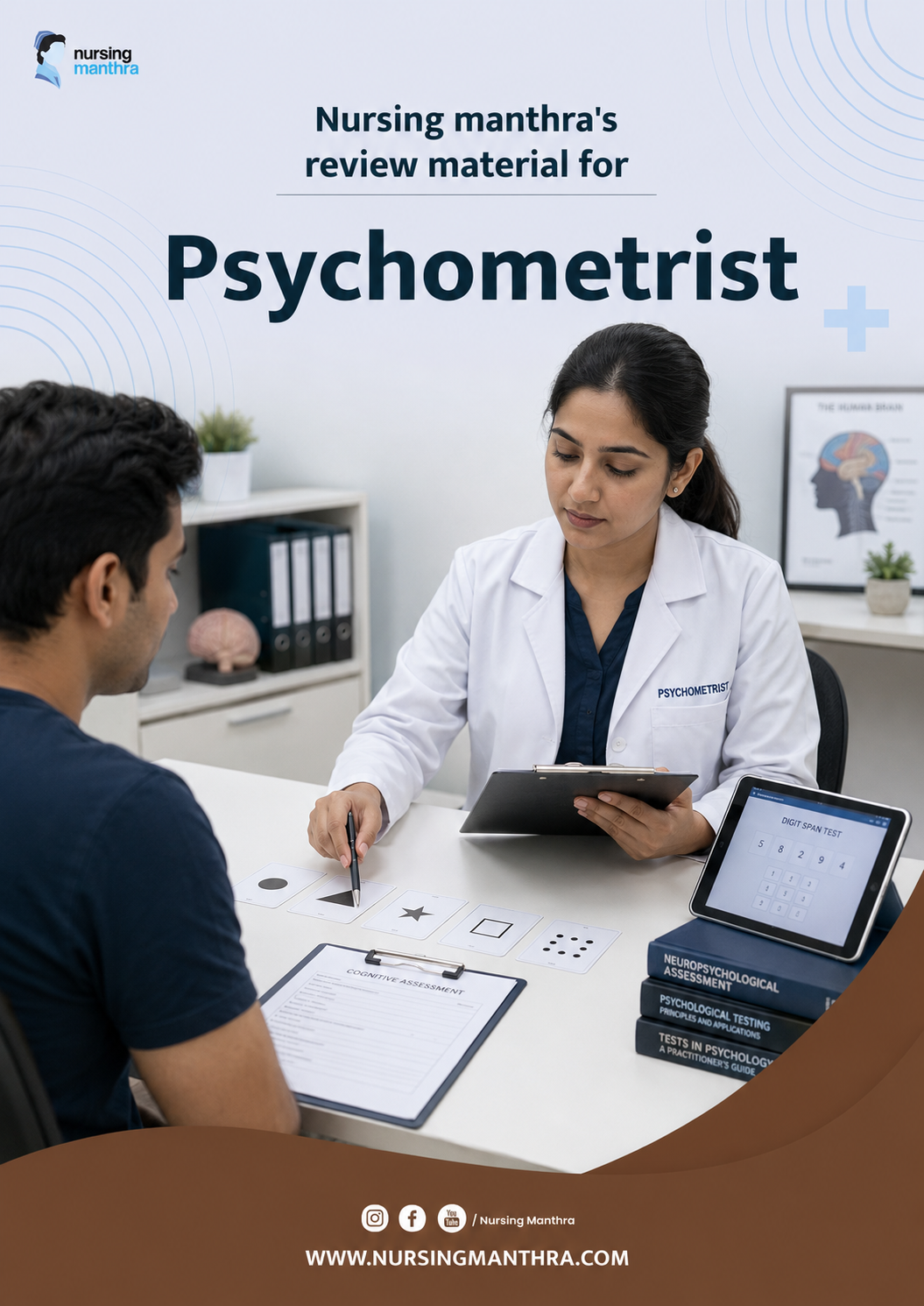
Nursing Manthra’s Review Material for Psychometrist is a comprehensive and exam-oriented learning resource developed for candidates preparing for psychometrist-related licensing examinations, professional assessments, competency evaluations and employment examinations.
The material is prepared by the Nursing Manthra academic team, with support from qualified healthcare and mental-health professionals. It is designed to strengthen the candidate’s understanding of psychological testing, cognitive assessment, neuropsychological evaluation, behavioural observation, test administration, scoring, documentation and professional ethics.
The book explains complex psychological and psychometric concepts in a clear and systematic manner. It contains illustrations, assessment examples, diagrams, tables, comparison charts, clinical scenarios, scoring concepts and concise revision notes to make learning easier and more effective.
Main Features of the Book
- Developed by the Nursing Manthra academic team.
- Covers the important theoretical and practical areas relevant to psychometrist practice.
- Includes thousands of exam-oriented multiple-choice questions.
- Contains recall-based, application-based and clinical scenario questions.
- Includes questions related to psychological, cognitive and neuropsychological assessment.
- Covers the selection, administration, scoring and documentation of psychological tests.
- Includes behavioural observation and client-interaction scenarios.
- Provides detailed explanations for important psychometric concepts.
- Uses illustrations, charts, tables and assessment examples to simplify difficult topics.
- Contains quick revision points and memory aids.
- Helps candidates identify weaker subject areas and improve examination confidence.
MCQ Format
Every practice question is presented in the following structured format:
Question
Four answer options
Correct answer
Detailed rationale
The rationale explains:
- Why the selected answer is correct
- Why the other options are less appropriate
- The relevant psychological or psychometric principle
- The correct professional action in the given situation
- Important safety, ethical and documentation considerations
Syllabus Included
1. Introduction to Psychometry
- Definition and purpose of psychometry
- Role and responsibilities of a psychometrist
- Difference between psychometrist, psychologist, psychiatrist and counsellor
- Scope of psychometric practice
- Working under professional supervision
- Common psychological and neuropsychological assessment settings
- Clinical, educational, occupational and research applications
- Limitations of psychometric practice
- Professional accountability
2. Foundations of Psychology
- Basic psychological concepts
- Human growth and development
- Learning and memory
- Attention and concentration
- Intelligence and cognitive functioning
- Emotion and motivation
- Personality development
- Behavioural principles
- Social and cultural influences on behaviour
- Normal and abnormal psychological functioning
3. Fundamentals of Psychological Testing
- Purpose of psychological assessment
- Types of psychological tests
- Standardised and non-standardised assessments
- Objective and subjective tests
- Individual and group testing
- Verbal and non-verbal tests
- Screening and diagnostic assessments
- Performance-based assessments
- Test selection principles
- Appropriate use of test manuals
4. Psychometric Principles
- Reliability
- Validity
- Standardisation
- Norms and normative samples
- Raw scores
- Standard scores
- Percentile ranks
- Z-scores and T-scores
- Mean, median and mode
- Standard deviation
- Normal distribution
- Confidence intervals
- Standard error of measurement
- Sensitivity and specificity
- Test bias
- Floor and ceiling effects
- Practice effects
- Interpretation limitations
5. Intelligence and Cognitive Assessment
- General intellectual functioning
- Verbal and non-verbal intelligence
- Fluid and crystallised intelligence
- Cognitive strengths and weaknesses
- Intelligence scales
- Reasoning and problem-solving assessments
- Processing-speed tests
- Working-memory tests
- Attention and concentration measures
- Digit-span assessment
- Visual–spatial functioning
- Executive-function assessment
- Cognitive screening tools
- Factors affecting cognitive-test performance
6. Neuropsychological Assessment
- Introduction to neuropsychology
- Brain structure and function
- Frontal, temporal, parietal and occipital lobe functions
- Cerebral lateralisation
- Attention and concentration
- Learning and memory
- Language functioning
- Executive functioning
- Visual–spatial abilities
- Motor and sensory functioning
- Orientation and mental status
- Assessment following traumatic brain injury
- Stroke-related cognitive changes
- Dementia and neurocognitive disorders
- Neurological and psychiatric influences on test performance
- Recognition of cognitive decline
7. Memory Assessment
- Immediate memory
- Short-term memory
- Working memory
- Long-term memory
- Verbal memory
- Visual memory
- Recognition and recall
- Learning curves
- Delayed recall
- Memory impairment
- Factors influencing memory performance
- Administration of common memory tasks
8. Attention and Executive-Function Testing
- Sustained attention
- Selective attention
- Divided attention
- Alternating attention
- Mental flexibility
- Planning and organisation
- Response inhibition
- Problem-solving
- Trail-making tasks
- Sequencing activities
- Digit-span tasks
- Stroop-type tasks
- Interpretation of slow or inconsistent performance
9. Personality Assessment
- Introduction to personality theory
- Objective personality inventories
- Self-report questionnaires
- Projective techniques
- Behavioural assessment
- Response styles
- Socially desirable responding
- Inconsistent responding
- Symptom exaggeration and minimisation
- Limitations of personality testing
- Appropriate administration and documentation
10. Emotional and Behavioural Assessment
- Anxiety assessment
- Depression screening
- Stress-related symptoms
- Mood assessment
- Behavioural difficulties
- Emotional regulation
- Trauma-related symptoms
- Suicide-risk indicators
- Substance-use screening
- Child and adolescent behavioural assessment
- Adult behavioural assessment
- Observation of emotional distress during testing
- Escalation of urgent concerns to the supervising professional
11. Child and Adolescent Assessment
- Developmental milestones
- Cognitive development
- Language development
- School-readiness assessment
- Learning difficulties
- Attention-deficit and hyperactivity symptoms
- Autism-related assessment support
- Intellectual and developmental disabilities
- Behavioural and emotional concerns
- Parent and teacher questionnaires
- Child-friendly test administration
- Establishing rapport with children
- Managing fatigue and reduced attention
- Ethical issues in testing minors
12. Adult and Older-Adult Assessment
- Adult cognitive assessment
- Occupational and functional evaluation
- Assessment following neurological illness or injury
- Mood and personality assessment
- Cognitive ageing
- Mild cognitive impairment
- Dementia screening
- Delirium and fluctuating cognition
- Sensory limitations affecting test results
- Fatigue, pain and medication effects
- Adapting the testing environment for older adults
13. Test Administration
- Preparing the assessment room
- Checking testing materials
- Verifying client identity
- Explaining the assessment process
- Obtaining appropriate consent
- Establishing rapport
- Reading standardised instructions
- Maintaining standard administration conditions
- Recording responses accurately
- Timing test activities
- Managing client questions
- Avoiding coaching or leading the client
- Handling interruptions
- Managing client distress or fatigue
- Discontinuing a test when appropriate
- Reporting unusual events to the supervisor
14. Scoring and Recording
- Accurate scoring procedures
- Use of scoring templates and manuals
- Calculation of raw scores
- Conversion to standard scores
- Age-corrected and education-corrected scores
- Recording behavioural observations
- Identifying omitted or invalid responses
- Checking scoring accuracy
- Avoiding calculation errors
- Computer-assisted scoring
- Maintaining original test records
- Recognising when interpretation must be referred to a qualified psychologist
15. Behavioural Observation
- Appearance and grooming
- Level of alertness
- Orientation
- Cooperation and motivation
- Speech and language
- Mood and affect
- Attention and concentration
- Frustration tolerance
- Impulsivity
- Response latency
- Perseveration
- Motor behaviour
- Fatigue
- Effort and engagement
- Test-taking attitude
- Documentation of objective observations
16. Mental-Status Examination
- Appearance and behaviour
- Speech
- Mood and affect
- Thought process
- Thought content
- Perception
- Cognition
- Insight
- Judgment
- Orientation
- Memory
- Attention
- Recognition of urgent psychiatric concerns
- Reporting abnormal findings appropriately
17. Professional Communication
- Therapeutic communication
- Establishing professional rapport
- Active listening
- Clear and neutral instructions
- Communication with anxious or distressed clients
- Communication with children and older adults
- Communication with clients who have language barriers
- Use of interpreters
- Communicating with psychologists and healthcare professionals
- Objective verbal and written reporting
- Handover of important observations
- Managing difficult interactions
18. Ethics and Professional Conduct
- Informed consent
- Confidentiality and privacy
- Secure handling of test materials
- Client dignity and autonomy
- Professional boundaries
- Cultural sensitivity
- Non-discriminatory practice
- Test security
- Appropriate use of assessment instruments
- Avoiding conflicts of interest
- Maintaining professional competence
- Reporting errors
- Working within the authorised scope of practice
- Following the directions of the supervising psychologist
- Ethical management of sensitive findings
19. Cultural and Linguistic Considerations
- Cultural influences on test performance
- Language proficiency
- Educational background
- Socioeconomic influences
- Cultural bias in psychological testing
- Use of appropriate normative data
- Working with interpreters
- Avoiding inappropriate conclusions
- Adapting communication without changing standardised procedures
- Reporting factors that may affect the validity of results
20. Special Testing Situations
- Testing clients with visual impairment
- Testing clients with hearing impairment
- Testing clients with motor limitations
- Testing clients with speech or language difficulties
- Testing clients with intellectual disabilities
- Testing clients with severe anxiety
- Testing clients with pain or fatigue
- Testing after traumatic brain injury
- Testing clients with suspected dementia
- Managing uncooperative or distressed clients
- Recognising invalid or unreliable test performance
21. Documentation and Record Management
- Accurate documentation
- Objective recording
- Assessment notes
- Behavioural observations
- Test-completion records
- Documentation of interruptions and deviations
- Correction of documentation errors
- Secure storage of assessment records
- Confidential electronic records
- Release of information
- Retention and disposal of test materials
- Reporting findings to the supervising professional
22. Quality Assurance and Error Prevention
- Preparation before testing
- Verification of client and test details
- Standardised administration
- Accurate timing
- Correct scoring
- Double-checking calculations
- Test-material security
- Recognition of administration errors
- Documentation of deviations
- Prevention of data-entry errors
- Appropriate use of test versions
- Maintaining assessment equipment
- Participation in supervision and competency review
23. Research and Basic Statistics
- Introduction to psychological research
- Quantitative and qualitative methods
- Variables and hypotheses
- Sampling methods
- Descriptive statistics
- Inferential statistics
- Correlation
- Reliability and validity in research
- Ethical research principles
- Data collection
- Interpretation of basic tables and graphs
- Evidence-based psychometric practice
Illustrations and Learning Support
The book contains a range of visual learning aids, including:
- Brain anatomy illustrations
- Cognitive-domain charts
- Psychological assessment flowcharts
- Test-administration sequences
- Scoring examples
- Normal-distribution diagrams
- Memory and attention models
- Comparison tables
- Behavioural-observation charts
- Mental-status examination guides
- Case-based assessment illustrations
- Quick-reference revision tables
These visual elements help candidates understand difficult concepts and retain information more effectively.
Material Delivery and Access
- The study material will be provided to the candidate’s registered Gmail account after confirmation of payment.
- Candidates must provide the correct and active Gmail address while placing the order.
- Nursing Manthra study materials are supplied as secure, read-only PDF files.
- The material cannot be downloaded, printed, copied, forwarded or shared.
- Access is provided only to the individual purchaser.
- Screen recording, reproduction, resale and unauthorised distribution are strictly prohibited.
- Sharing access with another person may result in the material being blocked without prior notice.
- Candidates should ensure that their Gmail account and device can access the material before completing the purchase.
Payment and Refund Policy
- Full payment must be completed before access to the study material is provided.
- Due to the digital and secure nature of the material, the amount paid is non-refundable once access has been issued.
- Refunds will not be provided because of examination postponement, examination cancellation, change of plans, failure to study, unsuccessful examination results or device-related difficulties.
- Candidates must confirm the correct profession, examination and material title before making payment.
Reviews (1)
1 review for *Nursing Manthra’s Review Material for Psychometrist*
Related Products

- Total pages – 1000
- Total MCQ –More than 2000
- Cost — 100 AED
Category of Questions For Nurses:
- Nursing fundamentals—30
- Adult nursing—61
- Maternal child health nursing—44
- Unit management and Leadership–15



Saudi Nurse Licensure Examination:
- conducted by prometric centres
- Total 200 mcq
- 2 parts of 100 questions each
- 30minute break in between
- 10% pilot questions
Book details:
Total MCQ-More than 1500
- total time -120minutes(2 hours)
- 1 mcq contains 4 options to select exact answer
- pass mark is 500 out of 800
- 1 question carries 4 mark
Total pages- 580
Total MCQ –1480
Cost —200 AED

- Total pages – 656
- Total MCQ – 2000
- Cost — 150 AED

Total Theory pages – 510
Total MCQ – 235
Important Access & Usage Terms
Please read the following conditions carefully before purchasing NursingManthra study materials.
- Read-Only PDF: Study materials are provided as read-only PDF files. Downloading, printing, copying and sharing are not permitted.
- Non-Refundable: Payments for digital study materials are non-refundable, subject to applicable consumer law.
- Individual Access: Access is provided exclusively to the registered candidate.
- Correct Gmail Address: Candidates must provide a valid Gmail address at the time of purchase to receive access.
- Copyright Protection: Unauthorized reproduction, recording, redistribution, resale, screen reproduction or sharing of the materials is strictly prohibited.
NursingManthra – Registered Midwife Prometric Examination Preparation for Gulf Healthcare Licensing.
TOTAL MCQ-2000
QUESTION, OPTIONS, ANSWER AND RATIONAL FORMAT
Delivery and Usage Conditions
-
- The study material will be shared with the candidate’s registered Gmail account after payment confirmation.
- The material is provided as a view-only PDF.
- It cannot be downloaded, printed, copied, forwarded, or shared with another person.
- Once the payment has been completed and access has been provided, the amount is non-refundable.
- Access is intended only for the registered purchaser.
Total mcq-2000
Question , option, answer and rational format
To view sample questions: https://nursingmanthra.com/dental-lab-technician-prometric-sample-questions/

Delivery & Terms
The Nursing Manthra study material will be sent to the candidate’s registered Gmail account after confirmation of payment.
The study material is supplied as a read-only PDF file. It cannot be downloaded, printed, copied or shared.
The amount once paid is non-refundable under any circumstances.
Candidates are responsible for confirming the latest licensing, eligibility and examination requirements directly with the concerned regulatory authority before applying.
Total pages:
Part 1- 339
Part 2- 360
Theory material- 93 PAGES
Total MCQ- 2000
MCQ format-Question, Options, Answer and rational
ridhva –
During my preparation, I found some parts of psychometric evaluation and scoring methods quite difficult to remember. Nursing Manthra’s review material gave me a simpler way to go over these areas and connect the concepts together. I kept revisiting the sections that needed extra attention, especially before the exam, and noticed a clear improvement in my understanding. It became one of the resources I relied on most during my final revision.