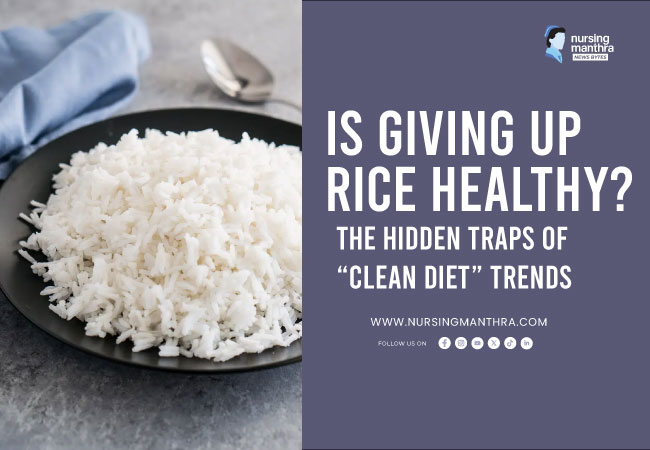
The idea of completely avoiding rice as part of a “clean diet” has become increasingly common among Malayalis who want to lose weight and improve overall health. Many people are influenced by claims that the carbohydrates in rice cause swelling, or that regular rice consumption weakens bones. However, health experts warn that cutting out rice entirely may do more harm than good.
Carbohydrates Are Not the Enemy
Carbohydrates are one of the body’s most essential nutrients and play a major role in keeping daily functions smooth and efficient. Experts say eliminating them fully is not a safe approach.
Carbohydrates help maintain glycogen, the body’s stored form of energy that supports muscle strength and stamina. When carbohydrate intake drops sharply, glycogen stores also reduce. This can lead to faster muscle fatigue and may place extra strain on tissues that support the bones, increasing stress on the body during normal activities.
Rice Offers More Than Just Carbs
Experts also highlight that rice is not “only carbohydrates.” It has several nutritional benefits:
- Gluten-free: Suitable for many people with digestive sensitivities.
- Low in fat and sodium: Naturally low levels, making it easier to include in balanced meals.
- Rich in minerals and vitamins: Contains B vitamins, iron, and magnesium.
- Quick source of energy: Provides rapid fuel for the body, especially for active individuals.
Moderation Matters Most
Nutrition specialists stress that the key is not to remove foods completely, but to practice moderation. Carbohydrates are important for brain function, muscle performance, and bone health. Instead of treating rice like an enemy, experts advise developing a habit of consuming it in the right portion size, along with a balanced diet that includes protein, vegetables, and healthy fats.
Bottom line: Rice does not need to be completely avoided for weight loss or better health. The healthier approach is to eat it in the right quantity—based on your body’s needs and lifestyle.