

If you’re a paramedical (allied health) or social care professional planning to work in Ireland, CORU is the key authority you need to know. CORU is Ireland’s multi-profession health and social care regulator, responsible for protecting the public by maintaining registers and setting standards for regulated professions. coru.ie
Official CORU contact
- Website: CORU.ie
- Email: [email protected] coru.ie
This guide explains the CORU recognition + registration journey for international applicants, including eligibility, documents, verification, English language rules, fees, processing time, and outcomes.
1) What is CORU and who does it regulate?
CORU currently regulates these professions (as of the latest CORU listing):
- Dietitians
- Dispensing Opticians
- Medical Scientists
- Occupational Therapists
- Optometrists
- Physical Therapists
- Physiotherapists
- Podiatrists/Chiropodists
- Radiographers
- Radiation Therapists
- Social Workers
- Speech and Language Therapists
- Social Care Workers
Professions soon to be regulated (CORU published list):
- Psychologists
- Counsellors
- Psychotherapists
- Clinical Biochemists
- Orthoptists
2) Recognition vs Registration (important difference)
Most international applicants go through two linked steps:
A) Qualification Recognition (assessment)
CORU assesses your qualification and professional background against the Standards of Proficiency required to practice in Ireland.
B) Registration (getting your registration number)
If recognition (and other requirements) are satisfied, you can be added to the register and receive your CORU registration number.
CORU’s newer process often combines both in one application type called “International Qualification Registration” through the applicant portal.
3) Eligibility for international applicants (who can apply?)
CORU’s international guidance notes state that to be considered:
- You must be eligible to practice/register in at least one country (generally where you qualified), and
- You must hold a qualification that gives access to the profession in the country where it was awarded.
If your profession is unregulated in your country, CORU may require proof of professional employment (minimum 1 year in the previous 10 years), verified by your employer.
Practical note about “Diploma vs Degree”: CORU does not simply say “diploma not eligible” for every profession in one sentence on the main pages. Instead, they assess whether your qualification is comparable to Irish requirements and the profession’s standards. Many Irish pathways are degree-level, so diploma holders often face “substantial differences” and may be offered compensation measures or refusal depending on comparability.
4) English language requirement (IELTS/OET may be avoidable)
CORU requires language competence for patient/public safety. However, you may not need IELTS/OET if you meet one of CORU’s exemption conditions—such as proving your qualification (and supervised placements) were completed through the medium of English or Irish, typically supported by a university letter.
CORU lists multiple exemption routes (I–V), including:
- CORU-approved Irish qualification, or
- Qualification + placements delivered in English/Irish (with evidence), or
- Having lived and practiced for 2 years in the past 5 years through English/Irish in a country where English/Irish is an official language, etc.
If you cannot meet the exemption conditions, you must take a CORU-approved English test and meet the minimum scores for your profession.
5) Step-by-step CORU process (International Qualification Registration)
Step 1: Read the right CORU guidance for your profession
Before you upload anything, read:
- The profession’s Standards of Proficiency
- International applicant guidance notes / checklists
- Any placement/clinical practice criteria (varies by profession)
CORU itself advises applicants to read guidance notes before starting.
Step 2: Create your account and start the online application
From CORU’s “How to apply” instructions:
- Open the applicant portal and select your profession
- Choose the application type “International Qualification Registration”
- Fill in qualification + experience details
- Download verification forms and complete required steps
EU/EEA Physiotherapists: CORU notes an alternative route may exist via the European Professional Card (EPC) (where applicable).
ORU Online Application Portal: What You’ll See After Login (Menu Guide)
After you create your account and log in to the CORU online system, you’ll commonly see these options in the left/menu area:
- Online Applications – Start a new application or continue an existing one
- My Inbox – Messages/updates from CORU (very important for document requests)
- Fees & Receipts – Payment records and receipts
- Document Library – CORU templates and downloadable forms (if available for your application)
- My Documents – Files you uploaded
- Missing Documents – Quickly shows what CORU is still waiting for
- Account Settings – Profile, password, etc.
Tip: Always check My Inbox + Missing Documents weekly (or whenever you receive an email update), because CORU may request additional evidence or clarifications.
Step 3: Prepare documents (make them “CORU-ready”)

CORU Application Sections (Portal Checklist)
Inside the application, you’ll usually complete the sections in this order (your portal view may show a checklist like this):
- Application Instructions
- Personal Information
- Eligibility Information
- Qualification Information
- Research Information (if applicable)
- Placement Information
- Internship Information (if applicable)
- Continuing Professional Development (CPD)
- Memberships (if applicable)
- Current Employment (Add/Edit)
- Verification Documentation
- Supporting Documents
- eVetting Form
- Fit and Proper Survey
- Fit and Proper Survey – Residency
- Attestation
- Payment
Practical approach: Keep all documents named clearly (example: Passport_Notarised_2025.pdf, Transcript_UniversityName.pdf, Placement_Duties_ClinicalHistology.pdf) to avoid confusion during upload.
CORU’s international guidance notes include these common documentation requirements and rules:
A) Identity and personal documents
- Certified copy of proof of identity -Passport -notary attested with in 6month duration.
- Two passport-size photos (scanned)
If you have name changes, include certified evidence (e.g., marriage certificate / gazette / legal name change).
B) Qualification + training documents
Expect to upload certified copies and (where needed) certified translations:
- Qualification certificate(s)
- Official transcript(s)
- Curriculum/syllabus/module descriptors
- Placement / internship details (dates, settings, supervision, duties)
Tip (best practice): Many universities can stamp the first and last page of a compiled syllabus, logbooks, and project summaries to show authenticity—this makes verification smoother even if CORU later asks for more detail.
To continue processing your application, you need to submit the following documents:
- Passport
- Your passport copy was notarised in 2023.
- a newly notarised passport copy with a stamp dated within the last 6 months.
- Bachelor’s Degree documents
Please submit:
- Complete course syllabus, stamped on the first and last page by your university or an approved certifier.
- Research project, stamped on the first and last page.
- Logbooks, stamped on the first and last page.
- Master’s Degree documents
Please submit:
- Degree certificate, stamped on the front page.
- Transcript, stamped on every page.
- Complete course syllabus, stamped on the first and last page.
- Research project, stamped on the first and last page.
- Placement duties
- Create a Word document explaining what work/duties you performed during your placements.
- Get this document stamped by your university, then upload it.
- Employment gap explanation
- explain why there is a gap in your employment from 2023 to now.
C) Practice eligibility and professional status
CORU requires evidence you are eligible to practise/register in at least one country.
This usually means:
- Home country registration/license (if regulated)
- Good standing / verification from the competent authority (when requested)
- Employer experience certificates (when relevant)
D) Background checks and declarations
International guidance notes include:
- Statutory Declaration (signed under oath)
- eVetting (invitation form + online completion)
- Criminal clearance certificates for each country (if you lived there 1 year and 1 day or more, from age 18) if relevant
Step 4: Understand “Certification” vs “Verification” (many applicants mix these up)
✅ Certification (certified copies)
CORU explains certified copies are checked and stamped by approved certifiers such as a solicitor, notary public, commissioner for oaths, etc.
✅ Verification (third-party confirmation)
CORU’s process also uses Verification Forms:
- You download forms from the portal
- Your university / employer / competent authority signs and stamps to confirm your details
- You upload the signed/stamped forms back into the portal
Verification Documentation: What to Add (Very Important)
In the Verification Documentation section, you may see options like:
- Add Regulator Verification
- Add Education Verification
- Add Placement Verification
- Add Internship Verification
- Add Employment Verification
What each one usually means (simple explanation)
- Regulator Verification: Confirmation from your licensing council/board (where applicable) about your registration status and good standing.
- Education Verification: Confirmation from your university/college about your qualification, dates, and award.
- Placement Verification: Confirmation of clinical placement details (hours, departments, competencies, supervision).
- Internship Verification: Confirmation of internship/clinical training period (if your profession includes it).
- Employment Verification: Confirmation from employer(s) about your role, duties, duration, and experience.
Tip (to reduce delays): Don’t wait until the end—collect signatures/stamps early, because universities and councils often take time.
Step 5: Pay the fee and submit
CORU’s international guidance notes and “How to apply” page state the application fee for this international route is €510.
Why applicants see different numbers online:
- CORU also lists a recognition fee of €410 separately on its recognition fee page.
- Registration fees are commonly €100 (and renewal €100 annually), shown across CORU registration guidance documents/FAQs.
So, €510 often reflects €410 (recognition) + €100 (registration) in a combined journey.
6) Processing time and what happens after submission
Typical timeline (realistic expectation)
CORU’s international qualifications FAQ states it can take up to 4 months from the date the application is deemed “complete.”
In real life, total time can extend if:
- documents are missing,
- verification is delayed by your university/employer,
- CORU requests additional placement detail.
Important rule: incomplete applications can close
If you don’t provide requested documents within six months, CORU may close the application, and you may need to reapply and pay a new fee.
7) Possible outcomes of the recognition decision
CORU’s international guidance notes describe these outcomes:
- Qualification Recognised (meets standards; sometimes considering post-qualification experience/CPD)
- Compensation Measure offered if there are gaps/substantial differences:
- Period of Adaptation (supervised practice in Ireland, sometimes with academic modules), or
- Aptitude Test (exam)
- Refusal (limited circumstances—e.g., ineligible, or unsuccessful completion of compensation measures after allowed attempts)
Decision Letter: Example of “Substantial Deficits” + Compensation Measures (Medical Scientist Sample)
Sometimes CORU issues a decision stating “substantial core deficits” were identified in a specific area (example shown: histology placement). When that happens, CORU may offer compensation measures.
Example compensation measures (as shown in the decision note)
- Period of Adaptation (POA)
- Complete clinical placement in:
- Clinical histology laboratory: 140 hours (≈ 4 weeks)
- Immunohistochemistry: 105 hours
- The placement must be completed in a laboratory that works to ISO 15189 standards.
- Must be supervised by a CORU-registered Medical Scientist.
- Supervisor requirement: CORU-registered member with 3 years post-qualifying professional experience.
- Complete clinical placement in:
- Aptitude Test
- Must take place in the Republic of Ireland
- Provided by an approved provider
- Fee shown in the example: €500
- Re-apply with new / further information
- Submit additional evidence that directly addresses the substantial deficits identified.
How to guide candidates (best practice):
If the deficit is “histology placement,” your additional evidence (or POA plan) should clearly show hours, lab areas covered, competencies performed, supervision details, and proof of standards (ISO 15189 environment).
“Decision letter comments” — examples you may see (explained simply)
(These are examples of meaning, not exact quotes.)
- “Substantial differences identified in clinical placement hours” → CORU may request more evidence or offer adaptation/aptitude test.
- “Insufficient evidence of supervised practice in X setting” → provide detailed placement duties + supervision proof.
- “Additional CPD and post-qualification experience considered” → your work/CPD helped close gaps.
8) After CORU registration: job search in Ireland (quick roadmap)
Once you’re registered, you can apply for roles.
Public sector (HSE)
- HSE Job Search portal: you can search by keyword/category and apply. about.hse.ie
- HSE Career Hub (job alerts + guidance): HSE Career Hub
Private sector
- Private job boards (example): Allied Health listings on IrishJobs. www.irishjobs.ie
Employment permits (for non-EEA candidates)
If you are not an EU/EEA/Swiss citizen, you’ll typically need an employment permit. Ireland’s Department of Enterprise, Trade and Employment (DETE) explains:
- Critical Skills Employment Permit pathway Enterprise Ireland
- Critical Skills Occupations List (eligibility list) Enterprise Ireland
Permit type depends on the occupation, salary, and eligibility list—so always cross-check the DETE list for your specific role.
9) Common mistakes that delay CORU applications (avoid these!)
- Uploading uncertified copies where certification is required
- Missing detailed placement/internship breakdown (setting, hours, duties, supervision)
- Not completing the verification forms properly (no stamp/signature) coru.ie
- No proof you’re eligible to practise/register in your home country coru.ie
- Not providing certified translations when documents aren’t English/Irish coru.ie
- Waiting too long after CORU requests missing documents (risk of closure after 6 months) coru.ie
10) Image/SEO note (fix your missing ALT text)
Your draft mentions images with empty ALT attributes. For better SEO + accessibility, use ALT text like:
- “CORU international qualification registration portal dashboard”
- “CORU document checklist for international applicants”
- “CORU fee payment screen (€510)”
- “Sample CORU recognition decision letter – outcome explanation”
CORU Email Directory (Useful Contacts)
Here are common CORU email contacts you can include in your blog (as shown in the directory screenshot):
- General Queries: [email protected]
- Fitness to Practise: [email protected]
- Registration (Health/Social Care Professional): [email protected]
- Recognition of International Qualifications: [email protected]
- Education Department: [email protected]
- Continuing Professional Development: [email protected]
- Media Queries: [email protected]
- Freedom of Information: [email protected]
- Data Protection: [email protected]
- Access Officer: [email protected] | Phone: 01 293 3160 (name shown: Aisling Hammond)
Tip: When emailing CORU, include your application/reference number in the subject line to speed up responses.
Need assistance with CORU registration?
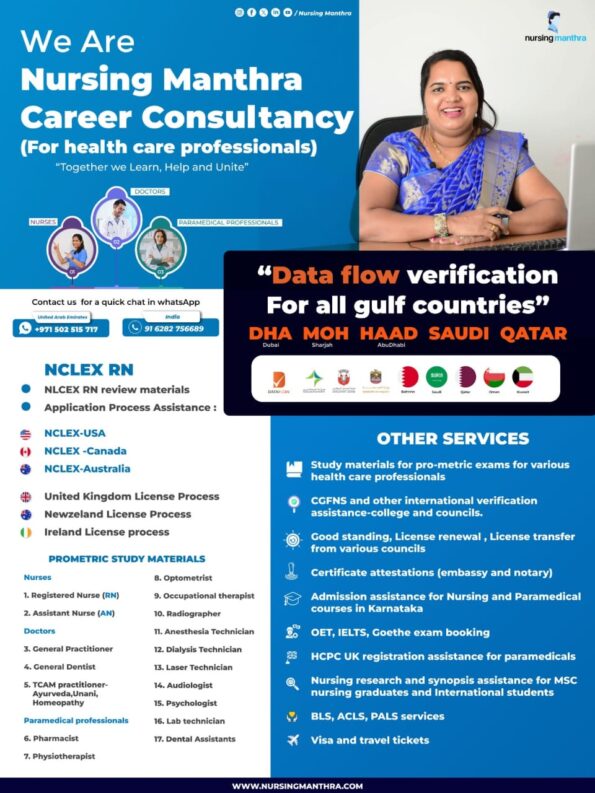
If you need help with document preparation, verification planning, placement duty formatting, and end-to-end guidance, you can contact Nursing Manthra on WhatsApp: +971502515717 (professional support).
.






Hi,Good morning,please help me out i need to do CORU registration ,I am a diagnostic radiographer
M,sc Radiology technology
B.sc radiography .
Hai , Kindly contact us through Nursingmanthra Whats app Number +971502515717