The recent results of the Foreign Medical Graduate Examination (FMGE) have once again sparked a nationwide discussion. With a staggering number of Indian students returning from countries like Russia, China, Ukraine, and the Philippines, the hurdle to practice medicine in India remains higher than ever.
In this article, we analyze the latest FMGE statistics, the reasons behind the low pass percentage, and what future medical aspirants need to know.
The Latest FMGE Results: The Numbers
According to the latest data released by the National Board of Examinations in Medical Sciences (NBEMS), the success rate for foreign medical graduates continues to be a cause for concern.
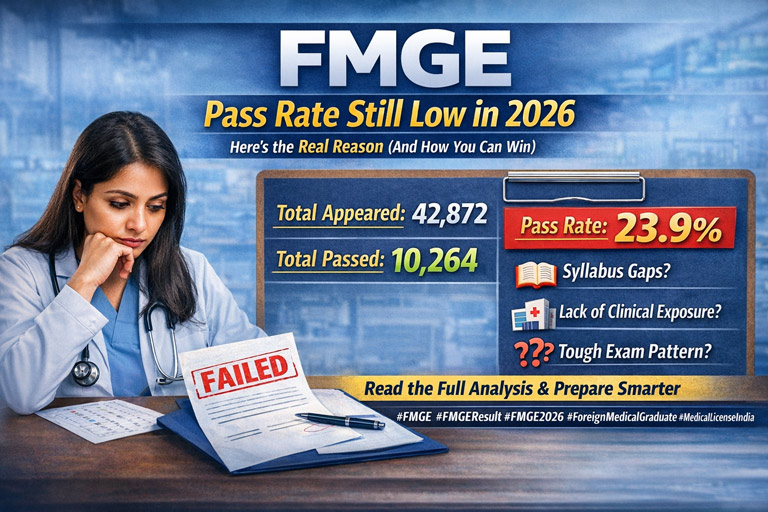
- Total Appeared: 35,819 candidates
- Total Passed: 8,561 candidates
- Passing Percentage: 23.9%
While this is a slight improvement over some previous years where the pass rate dipped below 15%, the fact remains that nearly 76% of candidates failed to qualify for a medical license in India.
What is FMGE and Why is it Mandatory?
Several factors contribute to the “mass failure” trend among foreign medical graduates:
- Syllabus Disparities: The medical curriculum in countries like Russia or China may differ significantly from the Indian standards focused on by the NMC.
- Lack of Clinical Exposure: Many students who study abroad face language barriers or restricted access to local hospitals, leading to a gap in practical clinical knowledge compared to Indian medical students.
- The “Entrance Exam” Nature: The FMGE is often compared to the level of the NEET PG. It requires a deep understanding of all 19 subjects of the MBBS curriculum, which can be overwhelming without focused preparation.
- Language and Environment: Adjusting to a foreign education system can sometimes lead to gaps in foundational knowledge, which becomes evident during the rigorous FMGE testing.
The Road Ahead for Medical Aspirants
The high failure rate highlights the importance of choosing the right destination for medical studies. If you are planning to pursue an MBBS abroad, consider the following:
- Quality of Education: Research the clinical exposure offered by the university.
- FMGE Coaching: Start preparing for the licensure exam from the first year of your MBBS.
- Standardized Curriculum: Opt for countries that follow a curriculum similar to the Indian or Western systems.
Conclusion
The 23.9% pass rate in the recent FMGE results is a reminder that the journey of a foreign medical graduate is far from over once they receive their degree. Consistent preparation, better clinical training, and a thorough understanding of the Indian medical system are essential to bridge the gap and serve as a healthcare professional in India.